
1. Stage 1946 – 1955
The birth of the brand and the first legendary models
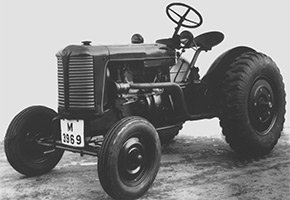
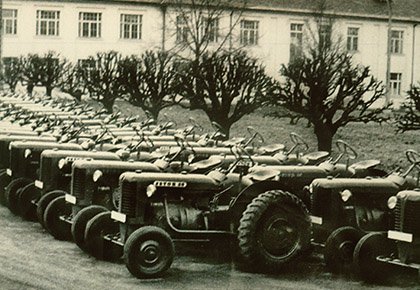
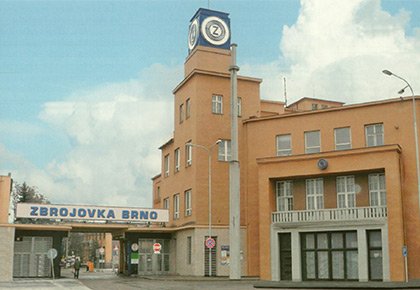
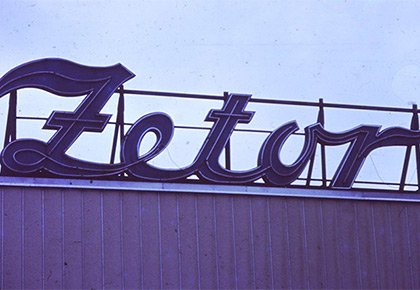
Zetor tractors began to write their history in the post-war period. The first Zetor Z 25 tractor has a birth certificate dated March 15, 1946. Five months later, the Chamber of Commerce and Trade of the Czechoslovak Republic issued a trademark for the Zetor brand. This brand, like all ingenious, was created very simply: the transcription of the pronunciation of the letter "Z", which was used in its emblem by the Brno Zbrojovka, where the first tractors were created, was combined with the last two letters of the word tractor. In 1954, the Zetor research and development base was established. During this period, after the highly successful Zetor 25 and 15, the more powerful Zetor 30 also entered the field, and in 1956, the new, more robust Zetor 50 Super model with an engine output of 50 horsepower (37 kW) was launched.
1945
1 BC (before Zetor)
The end of World War II. The Czechoslovak industry faces a challenge: to design a cheap, lightweight tractor that will be suitable for mass production.
1946
… and Zetor was born
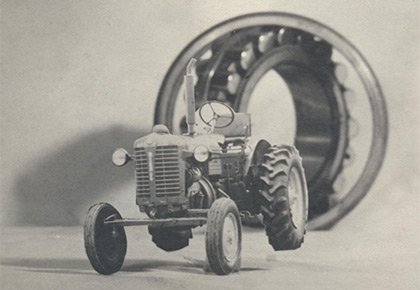
On March 15, 1946, a small celebration is held at the Zbrojovka Brno factory - on that day the first three Z 25 tractors are delivered to customers.
1947
The difficulties of the post-war period
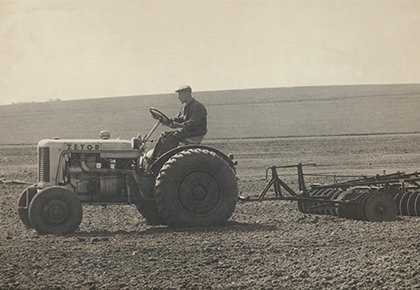
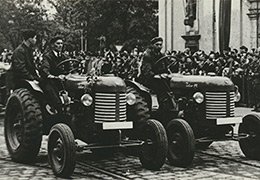
In 1947, a total of almost 3,500 tractors were sold – less than one third went to Ireland, Poland, Denmark or Belgium.
1947
Zetor 15 – an economical alternative
A total of 2,215 Zetor 15 tractors were produced between 1947 and 1949. This was a single-cylinder prototype of the Zetor 25 tractor. The Zetor 15 had a 15 horsepower (11 kW) diesel engine, a six-speed gearbox and a maximum speed of 22 km/h.
1948
Polish Káčko
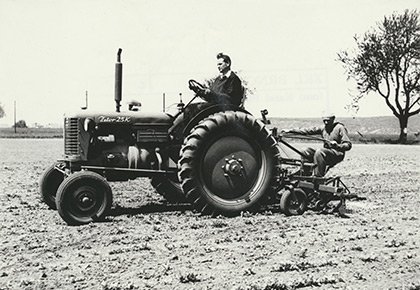
František Musil is constantly trying to innovate his product. He looks for inspiration mainly abroad. The result is a new version of the tractor – the Zetor 25 K (K = cultivation).
1948
Classified award
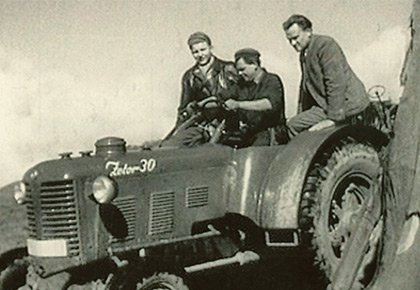
Musil has a lot of experience with diesel engine solutions. The result of the demand of the time is his design of the Zetor 30 tractor. More
1949
And as Aggregation
Zetor 25 has been gaining a lot of operating experience in different countries for more than two years. The result of its modernization is Zetor 25 A.
1949
We celebrate
In February 1949, the milestone of 10,000 tractors sold was reached.
1951
Great success
The Zetor 25 model reached 8,500 units produced in 1951. And yet, neither domestic nor foreign demand was fully satisfied.
1952
Right in the heart of Europe
In addition to tractors, Zbrojovka Brno also focuses on other production (motorcycle engines, firearms, typewriters). This limits the volume of tractor production.
1954
Own research and development
Zetor's research and development base was established in 1954. It uses the knowledge and experience of Zbrojovka Brno technicians.
2nd Stage 1956 – 1965
The concept of unification of parts – the first unified tractor line
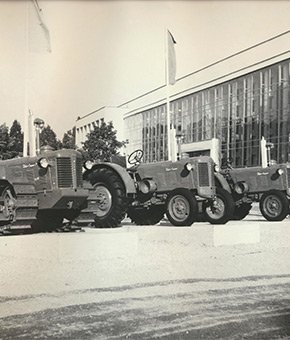
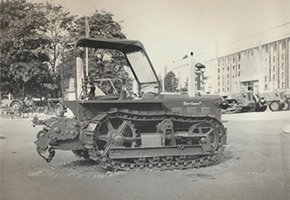
After ten years of the brand's existence, the Zetor Super P tracked tractor, which was first introduced at the second Czechoslovak mechanical engineering exhibition at the Brno exhibition center in 1956, has also successfully established itself alongside the already popular tractors.
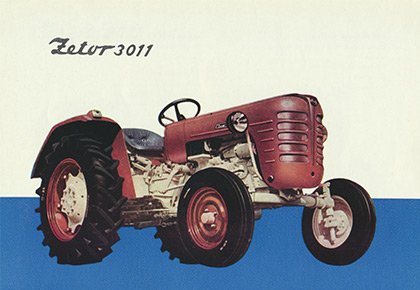
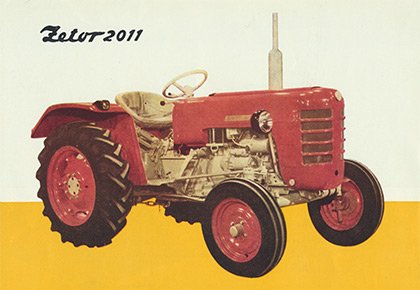
A few years later, Zetor was the first in the world to come up with a progressive and unique concept of using unified elements in the production of tractors, i.e. with the possibility of using identical parts for different models, thus greatly simplifying production and service. In 1960, the Zetor 3011 was launched on the market - the basic model of the revolutionary unified series - UŘ I. This was followed by other models of this series - Zetor 2011 and 4011, for which a new numerical designation of individual models was also introduced, taking into account various modifications.
1956
P is for bandit
The lack of hydraulic suspension systems for axle relief and the slow development of suitable tractor tires were the main reasons for the demand for tracked tractors in the 1950s.
1959
New assembly lines
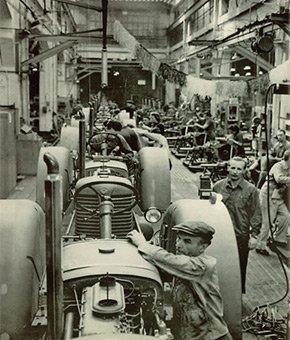
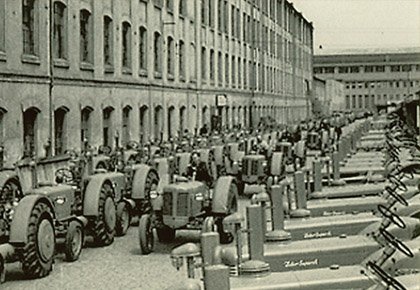
In 1959, two assembly lines were built, one for assembling Zetor 35 Super engines and the other for the final assembly of this type of tractor. Later, both lines were merged.
1960
Massive construction
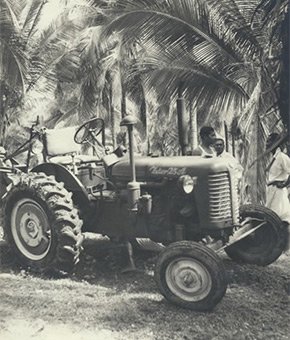
In 1960, the Super 35 tractor was modernized and the model was renamed the Super 50. These tractors traveled as far as Burma, Ghana and Iraq. By 1968, more than 150,000 units were produced.
1960
Concept of parts unification
In the second half of the 1950s, Zetor was the first in the world to come up with a progressive and unique concept of using unified elements in the production of tractors.
1960
Zetormatic
Along with the first UŘ I models, Zetormatic was introduced in 1960 – a hydraulic lifting system with automatic depth control, which allows part of the weight of the towed implement to be transferred to the rear axle of the tractor, thereby improving traction properties.
1961
Record
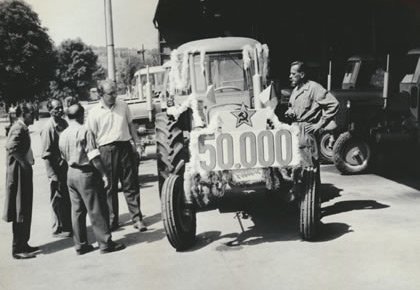
By 1961, sixteen years after the start of series production, a total of 158,570 Z 25 tractors had been produced, of which 97,000 were exported worldwide. Very few global tractor brands could match this result.
1962
Higher performance
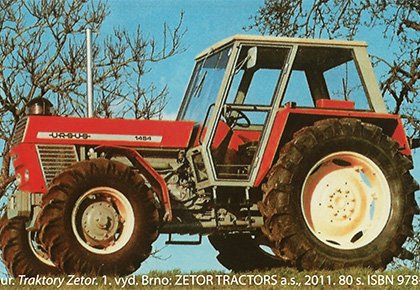
Zetor responds to customer demands for higher tractor performance. To support the development of a more powerful tractor, the "Czechoslovak-Polish Tractor Research Center" was established in 1962, headquartered in Zetor, Brno.
1962
Second and third
In 1962, another model of this series followed - the Zetor 4011, and in 1963, the 2011 model. This was the beginning of a popular range of tractors, which offered customers the opportunity to choose technical equipment according to their requirements.
1964
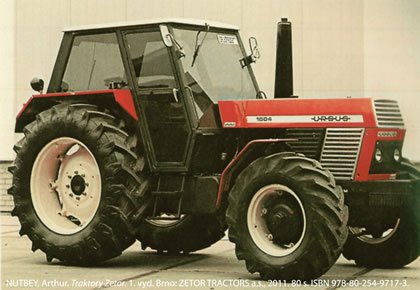
Zetor and Ursus
Based on the economic policy of the then political grouping, Czechoslovakia began to cooperate with Poland in the production of tractors.
1964
Local production
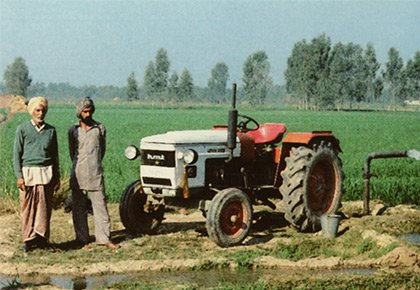
How to expand overseas without the risk of high transportation costs? Local assembly based on licensing agreements with local manufacturers is a solution.
3. Stage 1966 – 1975
Performance Boost – Crystal is Coming
After ten years of the brand's existence, the Zetor Super P tracked tractor, which was first introduced at the second Czechoslovak mechanical engineering exhibition at the Brno exhibition center in 1956, has also successfully established itself alongside the already popular tractors.
A few years later, Zetor was the first in the world to come up with a progressive and unique concept of using unified elements in the production of tractors, i.e. with the possibility of using identical parts for different models, thus greatly simplifying production and service. In 1960, the Zetor 3011 was launched on the market - the basic model of the revolutionary unified series - UŘ I. This was followed by other models of this series - Zetor 2011 and 4011, for which a new numerical designation of individual models was also introduced, taking into account various modifications.
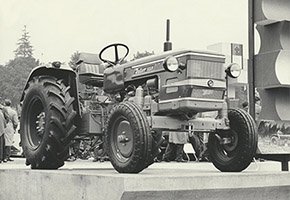
1966
Fives and ones
In 1966, the UŘ I was expanded with the largest model, the 5511, with an output of 52 horsepower (38 kW). It was a tractor with a modern and impressive appearance.
1967
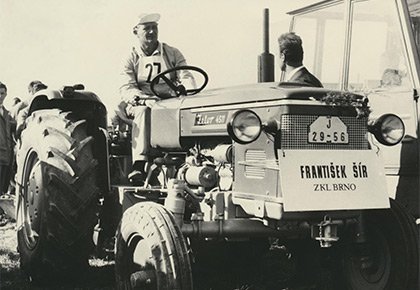
Series "5" UŘ I
UŘ I was modernized in 1967, following the recommendations of Zetor's Western European representatives. The following year, production of new models began: 2511, 3511 and 4511. In total, more than 80,000 tractors of this series were sold. More
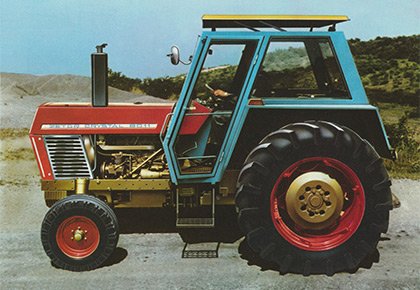
1968
Crystal is coming
The demand for higher performance brought about the first model UŘ II. It was introduced into series production in 1968. A number of new features and solutions, which were not at all common at that time, put Zetor at the forefront among the world's tractor manufacturers.
1968
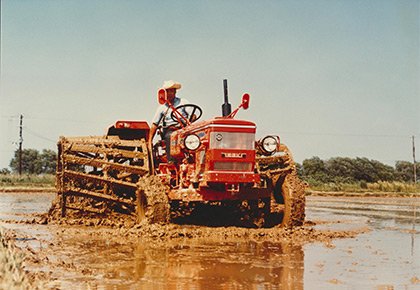
Rice fields
Zetor tractors were also supplied to the Japanese company Iseki between 1968 and 1974. They were equipped with cage wheels and a special braking system for working in wet rice fields. Over the course of seven years, around 4,000 tractors were supplied there.
1970
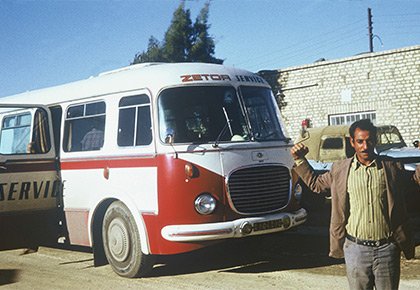
Iraq
Zetor's largest foreign production plant is in Iraq, in the State Enterprise Mechanical Industries industrial complex in the city of Iskanderiya.
1971
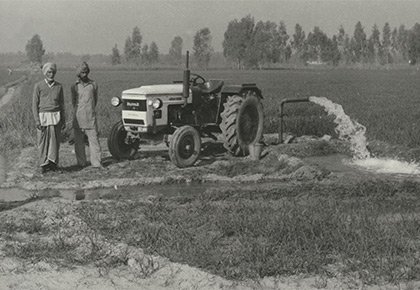
India
In 1971, the largest Indian machine tool manufacturer, Hindustan Machine Tools, concluded a licensing agreement with Motokov for the local production of the Zetor 2511 tractor under the HMT brand.
1972
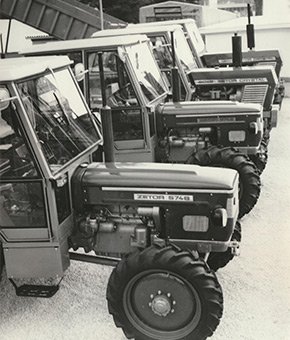
Series "7" UŘ I
UŘ I tractors have been continuously modernized since the launch of the first series. In 1972, the "7" series began production with the basic models 4712, 5711 and 6711, and then with the two-cylinder model 2511.
1975
The first six-cylinder
In 1975, the first six-cylinder model 12011 was launched, also available as the 12045 with front-wheel drive.

4. Stage 1976 – 1985
The brand gives the name to the company
On November 1, 1976, the world-famous Zetor brand also became the company name. Zetor continued to develop the UŘ II tractors. In 1975, the first six-cylinder model 12011 was launched on the market.
At the end of the 1970s, the gradual transfer of production to the Slovak company Závody tážkého strojárstva (ZTS) Martin began, where the innovated types of these tractors were produced under the ZTS name and underwent three more modernizations. The UŘ I series was also modernized and improved. After the transfer of production of the UŘ II Crystal series to Slovakia, the UŘ I once again became the most important production range of the Zetor company. The tractors had a robust yet comfortable safety cabin, greater performance with lower fuel consumption and improved transmissions with a wider speed range.
1976
Name change
In 1976, the name of the Líšeň factory was changed from the original ZKL (Ball Bearing Plant) Brno to Zetor Brno.
1977
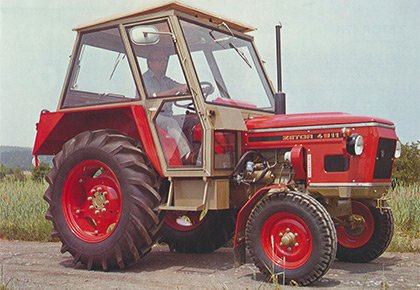
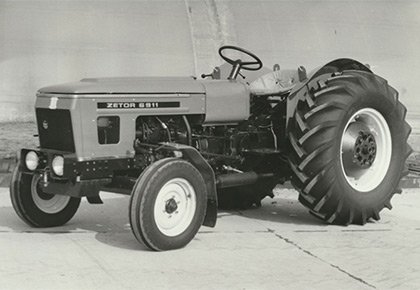
Series "9" UŘ I
Since 1977, the "9" series of UŘ I has been launched on the market with the basic models 4911, 5911 and 6911. During the modernization, attention was again paid to driver comfort.
1979
On the tip
The year 1979 marks a record number of tractors produced for the Zetor brand in its entire history. A total of 32,670 tractors leave the production lines.
1980
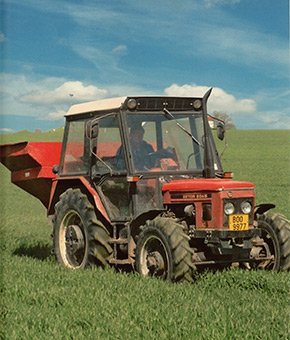
Series "10" UŘ I
In 1980, another modernization of the UŘ I – the “10” series – was available. The tractors offered greater power with lower fuel consumption and improved transmissions with a wider speed range.
1980
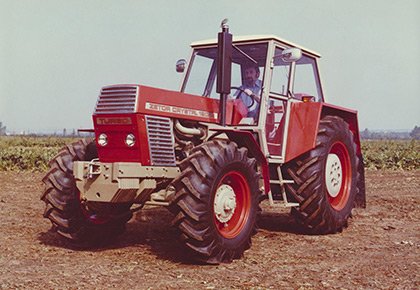
160 horsepower
In 1980, the 16045 turbo model with four-wheel drive and an output of 160 horsepower (118 kW) was launched on the market as part of the UŘ II.
1981
Martinr
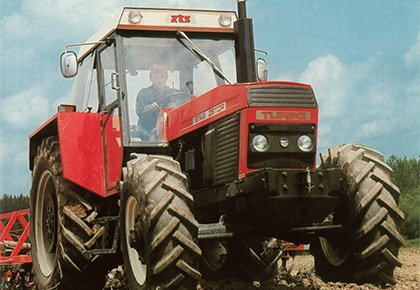
Martin The year 1981 was very significant for Brno – in accordance with the political move of the Czechoslovak government, the production of Crystal tractors was transferred to ZTS (Heavy Engineering Works) Martin in Slovakia.

1983
Entering the American market
In 1983, the Zetor brand entered the American market. During more than thirty years of operation in the USA, Zetor delivered almost 25 thousand tractors to its American customers.
1984
Series "2" UŘ I
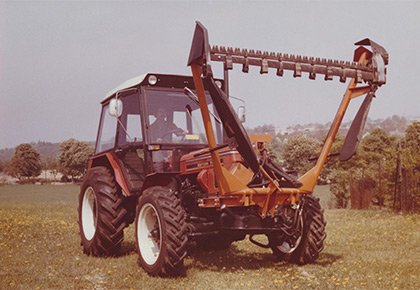
After the production of the UŘ II Crystal series was transferred to Slovakia, the UŘ I became the most important production range of Zetor. In 1984, the new "2" series was launched with the basic models 5211, 6211 and 7211.
5. Stage 1986 – 1995
Third unified series and innovations of UŘ I
At this stage, Zetor began production of UŘ III tractors, whose concept and technical parameters corresponded to increased demands, especially for performance. In 1992, shortly after the start of production of tractors of this unified series, the innovated UŘ I tractors also appeared on the market under the trade name Major.
In 1997, five updated models brought another significant design change to the UŘ I series. Tractors with the trade name Super are powered by three-cylinder and four-cylinder engines with power from 45 to 82 hp (33 – 60 kW). The rounded shapes of the fenders have returned and the similarly rounded hood is tilted forward for better visibility. Other changes include improved hydraulics, a new modern cabin design with ergonomically placed tractor controls including side shift, higher speed (40 km/h) and an expanded selection of accessories.
1989
7711 from the "2" series
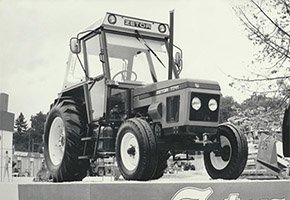
In 1989, the 7711 model with four-wheel drive began production, including a Turbo version with 88 horsepower (65 kW).
1991
UŘ III – return to higher performance
At the beginning of the nineties, the absence of production of tractors in the medium power segment was resolved. In 1991, the new UŘ III models appeared, namely the 7520/40, 8520/40 Turbo and 9520/40 Turbo.
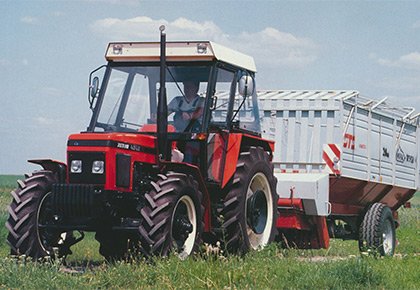
1992
Series "92" UŘ I
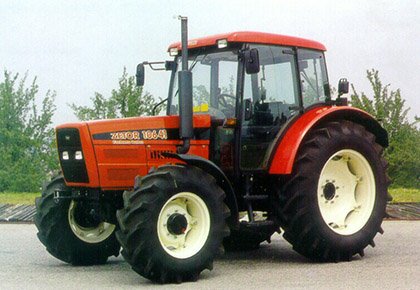
This series was introduced in 1992. The designers again paid attention to the main attributes: higher performance, reliability and comfort. This series consists of the models 3320/40, 4320/40, 5320/40, 6320/40 and 7320/40 Turbo. Engine power is from 52 to 82 hp (38 – 60 kW).
1993
Privatization
On July 1, 1993, as part of privatization, part of the assets of the state-owned company Zetor were transferred to a company called Zetor, as, the majority share of which belongs to Konsolidační banka.
1993
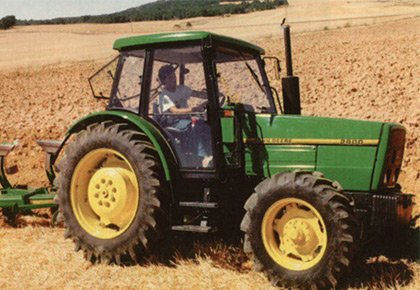
Green and yellow Zetor
In 1993, Zetor signed a contract with John Deere to supply low-cost but high-quality tractors to Latin American markets.
6. Stage 1996 – 2005
Stage of change
Zetor has undergone many changes in this decade. On July 1, 1993, it was privatized and the company's name was changed to Zetor, as. In 2000, a revitalization program was adopted and on April 22, 2002, the government of the Czech Republic approved the sale of the state's equity stake in HTC Holding.
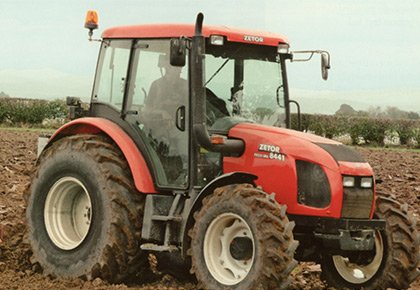
This company immediately began the financial stabilization of the company along with a massive restructuring. In parallel, the development and innovation process of the UŘ I continued, mainly in terms of meeting the increasingly stringent environmental protection regulations in developed markets. Since 2004, the previous models of this series have been replaced by modern UŘ I tractors known as the Proxima series, which meet the stricter emission limits. Development did not stop with the UŘ III tractors, which were significantly modernized and launched on the market in 1998 under the trade name Forterra.
1997
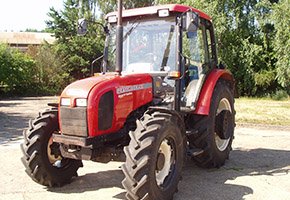
New Zetor Super UŘ I
A prime example of modern technology building on traditional tractor shapes from the 1950s. Specifically, these are five new models from 1997: 3321/41, 4321/41, 5321/41, 6321/41 and 7321/41 T.
1997
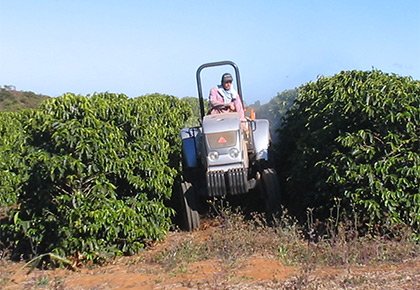
Brazil
In 1997, the Brazilian company Agrale signed a contract with Zetor to produce a tractor with an output of 60 – 80 horsepower (44 – 59 kW).
1998
Closer to the present
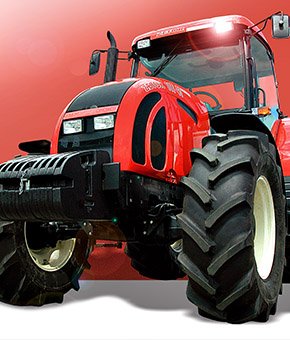
Development does not stop with the UŘ III tractors, which are significantly modernized and launched on the market in 1998 under the trade name Forterra. Unlike the previous UŘ III models, the Forterra is produced exclusively in a four-wheel drive version.
1998
Motometal
In 1998-1999, Motokov bought almost half of the shares from Konsolidační banka. Unfortunately, due to a lack of working capital, tractor production was stopped.
1999
Turning point
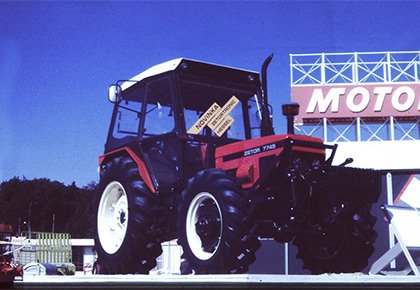
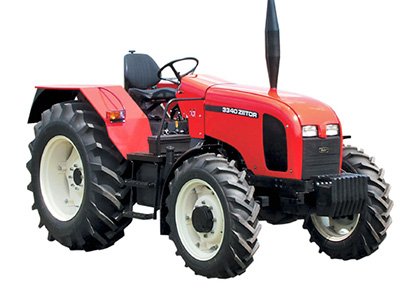
In 1999, Zetor had to respond to the demands of the times again. It therefore decided on a specific solution: the medium-power UŘ III was still intended for the European and North American markets, the UŘ I for the Russian and African markets.
2000
New millennium
Zetor undergoes many changes at the turn of the millennium. In 2000, a revitalization program is adopted.
2002
HTC Holding Inc.
A key year for ZETOR and the beginning of a new era. HTC holding as becomes the owner of ZETOR, which saved ZETOR from bankruptcy and invested additional funds in its operation.
2004
Proxima on stage
At the beginning of the new millennium, the development and innovation process of UŘ I continues, mainly in terms of fulfilling the increasingly stringent environmental protection regulations in developed markets.
7. Stage 2006 – 2015
Return to higher performance – the future has already begun
In 2007, the Zetor range was expanded with the Proxima Plus series, which is equipped with a front and rear axle designed for heavy loads. At the end of 2008, production of the Proxima Power series began, which is equipped with an interesting innovation - a transmission with electro-hydraulic reverse gear, which allows reverse gear shifting under load.
The addition to the Forterra series in 2010 is the 135 model with a new 136 hp (100 kW) Z 1605 engine with a sixteen-valve cylinder head. For 2011, Zetor is introducing further modifications to the Proxima, Proxima Plus and Proxima Power series tractors. At first glance, the tractors have a new type designation. The main modernization is the introduction of mechanical hydraulics with regulation from the third-point linkage. In 2012, the latest representative of the product portfolio is the Forterra HSX - the most powerful and best equipped tractor. Since 2011, the Forterra model series and later the Forterra HSX have been equipped with the HitchTronic system - automatic regulation of the rear three-point linkage.
2007
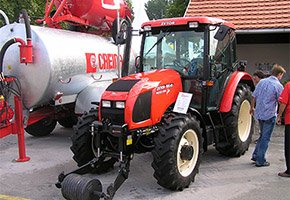
Proxima with something extra
In 2007, the Zetor range was expanded with the Proxima Plus series, which features heavy-duty front and rear axles. A new feature is the hinged hood, allowing easy access to the oil, fuel and air filters.
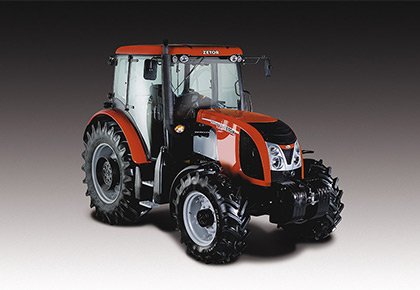
2008
The third member of the proxima family
At the end of 2008, the Proxima Power tractor began production in three new four-cylinder models, which are equipped with an interesting innovation - a transmission with electro-hydraulic reverse gear.
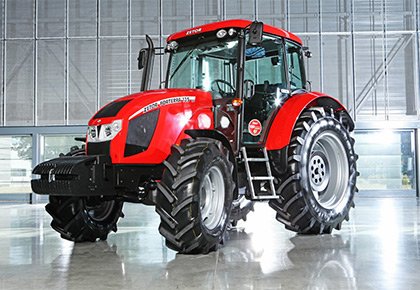
2010
Economical 16V engines
In 2010, the latest addition to the Forterra range is the 135 model with a new 136 hp (100 kW) Z 1605 engine with a sixteen-valve cylinder head.
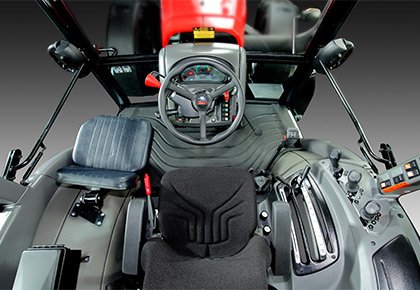
2011
Proximity in the new decade
Zetor presents a number of new products and improvements. For 2011, it has introduced further modifications to the Proxima, Proxima Plus and Proxima Power tractor series.
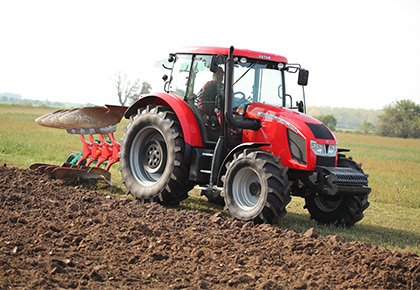
2012
Forterra HSX
In 2012, Zetor launched the Forterra 140 HSX tractor. It is equipped with the latest technology.
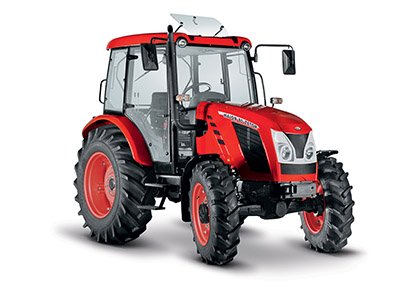
2013
ZETOR MAJOR on the scene again
A tribute to the weapon! (military) – the legendary Zetor Major is back! With the Major, not only the name of the popular model from the sixties returns, but also the entire concept – a compact and powerful tractor, versatile and yet reliable.
2014
FORTERRA HD moves Zetor into a higher performance category
Zetor as a brand only for smaller farmers? The traditional Czech tractor manufacturer responded to this with the Forterra HD model with many technical innovations, oriented towards customer benefit and comfortable operation...!!! The 150 horsepower engine knows no obstacles.
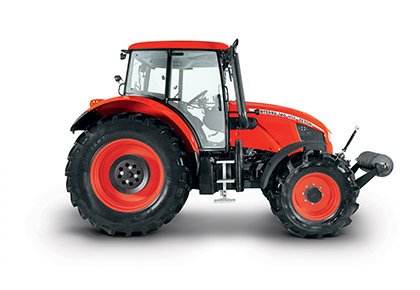
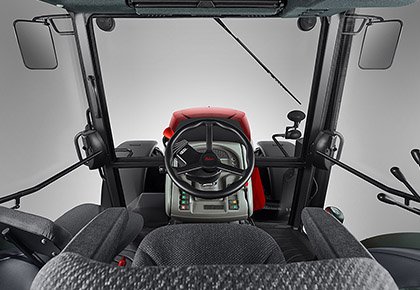
2015
ZETOR CRYSTAL The legend returns!
Zetor customers are quickly learning a new phrase - Crystal Hardworker!!! And from the basic parameters of the reborn legendary Crystal model, it is clear that it did not get the nickname "hardworker" by chance. It works hard, regardless of the conditions.
8. Stage 2016 – 2020
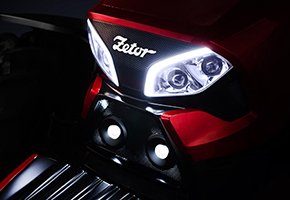
ZETOR by Pininfarina
In recent years, the ZETOR brand has become a bit richer again. It has gained new customers, entered new markets, overcome many challenges and managed to gradually expand its product portfolio to the existing eight model lines in the power range from 20 to 170 hp.
Continuous product modernization still meets customer requirements to the maximum extent. All this is wrapped in the elegant ZETOR by Pininfarina design, which was applied to all model lines of commercial tractors until 2020.
2016
ZETOR's 70th anniversary
Break out the champagne and prepare a proper celebration. ZETOR is celebrating 70! What old age is to a person, are the best years for ZETOR! Since the early 25s, ZETOR has constantly worked on how to simplify and make life easier for its customers.
2017
We are entering new markets
This year, the ZETOR brand is strengthening its position in the world and continuing to expand into markets where it has not yet operated. It is entering the Israeli, Jordanian and Philippine markets directly or through its affiliates. The brand is also experiencing a renaissance in Africa – Kenya and Zambia are other African countries where local farmers can manage their fields and farms using Brno-made equipment.
2018
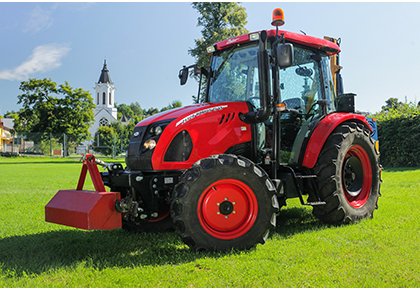
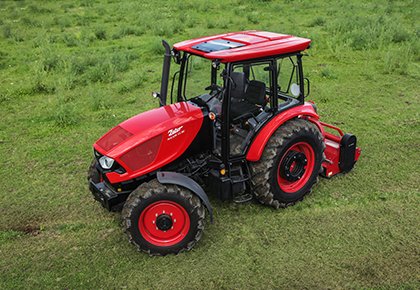
Major in a new design is heading to customers
After a successful global presentation at the Agritechnica 2017 trade fair, the MAJOR model series designed by ZETOR by Pininfarina has entered series production. It attracts customers not only with shapes that emphasize the tractor's dynamics and power, but above all with its universal use and wide application in real conditions. The first machines of the MAJOR model series will start rolling off the production line in the middle of the year. This year, ZETOR has another reason to celebrate.
2019
There is always a reason to celebrate with us.
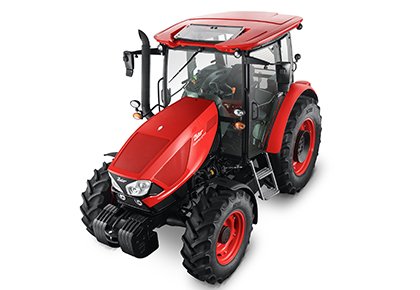
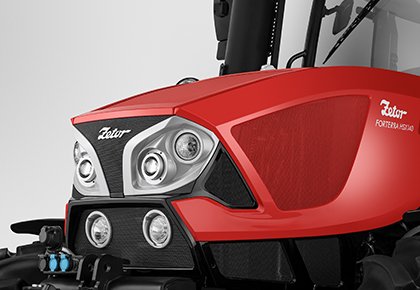
The PROXIMA model series is also celebrating in 2019. It has been exactly 15 years since the start of production of tractors in this model series. It first appeared on the market in 2004 as a successor to older models. It has long been one of the most popular model series among customers. And what to give it as a gift? A new design!
2020
Primo and Compax expand ZETOR's product portfolio
How does the ZETOR brand's product portfolio stand in lower power categories? The compact tractor lines are expanded by ZETOR PRIMO and ZETOR COMPAX, modern machines with power from 20 to 40 horsepower, which ZETOR TRACTORS produces in cooperation with the South Korean concern Tong Yang Moolsan Co., Ltd.
9th Stage
2021 - ?
The year 2021 marks the semi-annual anniversary of the brand's founding and the start of production of ZETOR tractors. Over the years, the brand has become synonymous with honest work and, as one of the most important exporters in the Czech Republic, has gained prestige on the world market.
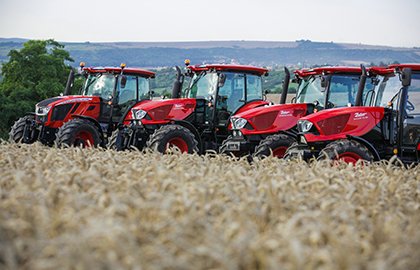
2021
We have been written in history for 75 years
The year 2021 marks the semi-annual anniversary of the brand's founding and the start of production of ZETOR tractors. Over the years, the brand has become synonymous with honest work and, as one of the most important exporters in the Czech Republic, has gained prestige on the world market.